
I had the joy of interviewing a dear colleague about her new book, Courage to Be You. She wrote about people pleasing: a topic many Highly Sensitive People (HSPs) wrestle with.
I remember, years ago, when I first heard this term from another colleague… it left me feeling cringy, embarrassed, and ashamed. The other person was referring to it with a bit of judgment and criticism. “People pleaser” sounded like an insult, a disease, and I wanted nothing more than to be free of that ‘ugly’ affliction!
Where does People Pleasing start?
It starts way before we can think logically: in childhood, as a protective mechanism. We all had to please our primary caregivers to an extent, so that they would continue to care for us. We’re absolutely defenceless as babies… and if our caregivers don’t like or love us, we could die. Nature has built this into us.
And then, other factors also come into play.
As HSPs, we’re naturally wired to sense the needs and moods of those around us. Our deep empathy is a gift — but it can also come with a hidden cost.
Many of us learned early in life that being “good,” agreeable, and helpful kept the peace. With a sensitive nervous system, any kind of disharmony felt threatening and scary. It also depends on how our parents were wired… were they kind and gentle, or did they blow up at small things, creating unpredictability in the home?
The more unpredictability, the less safety, the more we needed to make sure to keep the peace, to appease them, to feel safe and get our next meal.
Over time, and with lots of repetition, those patterns can morph into people-pleasing behaviours as adults. The difference is… It’s no longer functional. It had a vital purpose when we were small. Now it leaves us drained, resentful, or disconnected from our true selves.
The 5 Types of People Pleasing
In her book, Marléne describes five common people-pleasing behaviours. As you read through them, notice if any feel familiar:
Rescuing:
Jumping in to help or save others, even when it’s not your responsibility and even when you’re exhausted.
Conflict-Avoiding:
Saying yes when you mean no, or staying silent to keep the peace at all costs.
Fitting In:
Hiding or changing parts of yourself so you’ll be accepted.
Overgiving:
Pouring out energy, time, or resources without balance or reciprocity.
Fixing:
Taking on the burden of solving other people’s problems, sometimes before they’ve even asked.
Each of these behaviours once served a purpose. They helped us feel safe, accepted, or valued in our families and communities. And yet… what kept us safe back then can limit us now. People pleasing might look kind on the outside, but on the inside it can leave us tired, grumpy, and longing to be truthful.
The Courage to Change
The first step is simply awareness… to notice the moments you slip into rescuing, fixing, fitting in, conflict avoidance or over-giving.
Then comes the courage to pause, to check in with your own needs, and to take one small step toward honesty.
Saying no doesn’t mean you’re unkind. It means you’re respecting yourself, and in the long run, it creates healthier, more authentic relationships.
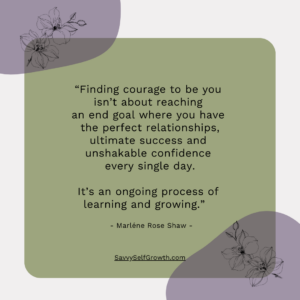
As Marléne reminds us, it takes courage to be fully yourself in a world that often rewards self-sacrifice. And that courage opens the door to lives of balance, fulfilling relationships and genuine connection.
Our Conversation about People Pleasing and Transactional Analysis (TA)
Marléne’s links are all underneath the video.
EFT Tapping for People Pleasing
If you’d like a gentle way to start shifting these patterns, experiment with the EFT tapping below.
Honesty Note: the below EFT ‘script’ can be extremely helpful in the moment. Please be aware that (from my 20 years of EFT experience) it will likely not fix, cure, or take away this entire pattern (I absolutely wish it could 😀). These types of patterns we’ve had for a very long time, benefit from slow, gentle, continuous, and deep work. Never lose hope that you can change… and at the same time, have big doses of patience and compassion for yourself.
Remember, the behaviour had a purpose when it started. If we don’t know what to replace it with, it might feel unsafe to let it go. That’s not self-sabotage, that is your amazing subconscious keeping you safe.
So be gentle and kind as you do this tapping, and reach out to an EFT professional if you need support to shift it more deeply.
Setup (side of hand):
“Even though I feel stuck in people pleasing, I choose to be kind and gentle with myself.”
“Even though I’ve learned to rescue, fix, or over-give [replace with the behaviour you notice in yourself] to feel safe and valued, I’d like to be open to a new way.”
“Even though it feels scary to put my needs first, I choose to be kind and gentle with myself.”
(You can either start your tapping round on the Top of Head (TH) point, or end there — it really doesn’t matter. Just move on to the next point with every sentence.)
Round 1 — Acknowledging the pattern
EB: “I feel pressure to keep everyone else happy.”
SE: “I say yes when I want to say no.”
UE: “I rescue, fix, or give too much.” [replace with your behaviour]
UN: “It feels unsafe and awful to disappoint anyone.”
CH: “I’m afraid of conflict.”
CB: “I hide my true self to fit in.”
UA: “I’ve been doing this for so long… I don’t know how to be different.”
TH: “But now I feel drained from pleasing everyone else.”
You can do the above round a few times until you feel calmer and more neutral about it. Or, tap more rounds by simply telling yourself the truth about your tendencies to please, mentioning the last time you can remember doing that, what it feels like to you when you do that, and the cost it has.
For instance:
The last time I pleased someone was…[fill in the blank — what happened?]
I did that because…[fill in the blank]
It wasn’t safe for me because…[fill in]
And that also makes me feel… [fill in — what other emotions come up?]
And if I don’t please, what might go wrong is…[fill in]
But when I DO please others, the cost is…[what’s the impact on you?]
I understand why it started…
And I would like this to heal now
Take a deep breath in and out. What do you notice? What do you feel, think, or sense now?
Round 2 — Beginning to shift
EB: “What if it’s safe to listen to my own needs?”
SE: “I can be kind without rescuing or fixing.”
UE: “I don’t have to over-give to be valued.”
UN: “I want to believe it’s safe to show up as me.”
CH: “Maybe I can handle small conflicts with grace.”
CB: “I, too, deserve balance in my relationships.”
UA: “Maybe it’s okay to start saying no with kindness.”
TH: “I’m starting to learn the courage to be myself.”
Take a deep breath after your tapping rounds and notice how you feel. Sometimes even a small shift (a bit more calm, clarity, or self-compassion) can be the first step toward loosening old patterns.
Closing Thoughts
If people pleasing has been your way of surviving and connecting, you’re not alone. Many sensitive souls share this path, including me.
The good news: it IS possible to unlearn these old strategies and replace them with self-respect, honesty, and authentic connection… even new behaviours.
Courage to be You has very useful and practical strategies for each of the 5 behaviours. Plus, you can use EFT tapping to gently support the emotional journey of change.
It does take courage to be you, dear Soul, and every small growth step in that direction is worth celebrating. The world needs who you really are, not the part that needed to survive a long time ago.